Depth
Sensor depth changes the amount of light reaching the measurement point. Compare corals at their actual positions rather than assuming the surface value applies everywhere.
Reef lighting is not one PAR number. Depth, horizontal position, rockwork, shadows and fixture settings can create very different light conditions across the same aquarium. Measure at coral level, map the tank, adjust the lighting, then measure again.
A fixture specification or one center reading cannot describe the light at every coral. Underwater light changes with position and setup, so useful reef measurements are taken where the corals actually live.
Sensor depth changes the amount of light reaching the measurement point. Compare corals at their actual positions rather than assuming the surface value applies everywhere.
The center, edges and corners of a tank can receive different intensities, even when they are at the same depth.
Aquascape structures, overhangs and neighboring corals can create localized shadows that a single open-water reading will miss.
Intensity, mounting height and channel settings can change both the amount and distribution of light in the tank.
Take readings where the corals actually sit.
Repeat across depths and positions to reveal the pattern.
Change fixture settings, mounting or placement based on evidence.
Verify the change at the same measurement points.
Reef-light data becomes more useful when you know what each measurement describes and when you keep the measurement position and lighting conditions consistent.
Use underwater PAR to compare the photosynthetically active light reaching different coral positions inside the aquarium.
UVA measurement adds visibility into ultraviolet output that is not described by the PAR value alone.
Separate red, green and blue information can help document how spectral balance changes as fixture channels are adjusted.
Multiple recorded positions help reveal high-light areas, lower-light zones and shadows across the reef structure.
The goal is not to chase a single impressive number. Build a repeatable pattern of measurements that helps you understand how light is distributed through the aquarium.
Choose repeatable points across the tank—top, middle, lower areas, center, edges and important coral locations. Keep fixture settings and sensor orientation consistent when comparing results.
A light map can show where intensity falls off, where rockwork creates shadows, and where a coral's actual position differs from the tank's center reading.
AH-Reef and MegaReef 100 play different roles. One gives you underwater measurement data; the other gives you a controllable reef-light source. Use them as separate tools or as parts of the same measure-adjust-verify workflow.
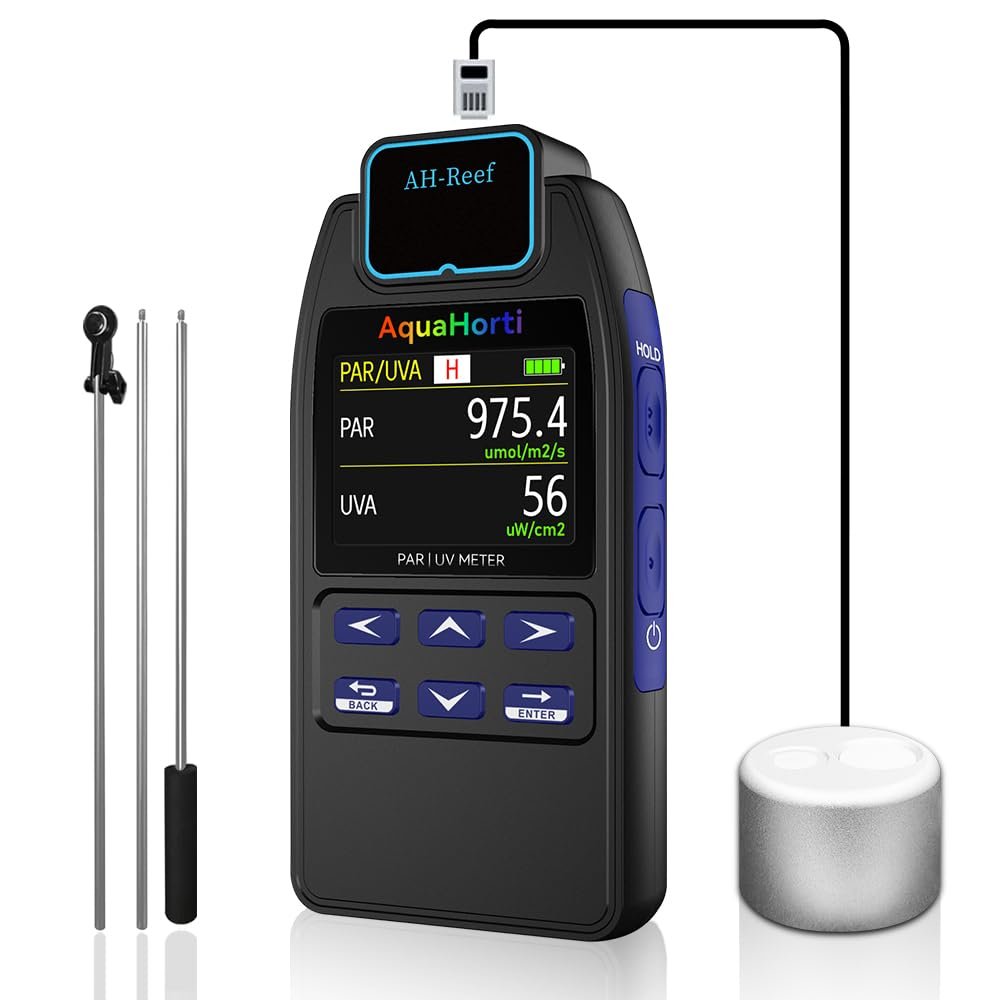
Underwater PAR and UVA measurement at the locations where your corals actually live.
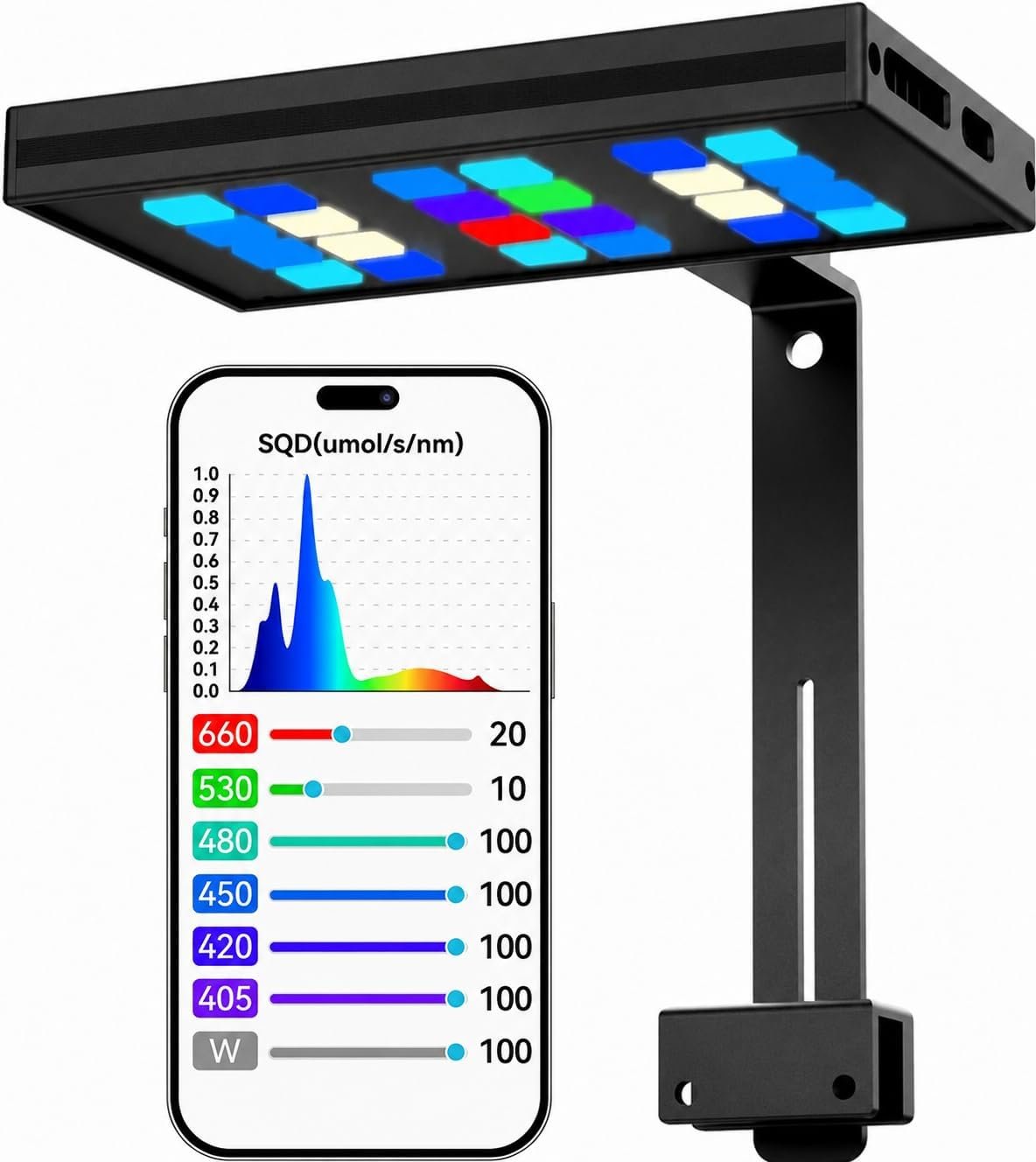
A seven-channel Bluetooth-controlled reef LED light for building and adjusting a reef-lighting program.
Use the AquaHorti reef-lighting articles to understand PAR, spectrum, coral placement and measurement workflows before interpreting a single number.
Browse AquaHorti reef-lighting articles in one focused knowledge path.
Start with PARUnderstand why visual brightness and actual underwater PAR are different questions.
AquaHorti BlogContinue into reef lighting, measurement methods and other AquaHorti technical guides.
Underwater PAR changes with depth, horizontal position, rockwork, shadows, fixture height, channel settings and sensor position. A single center reading cannot describe every coral location.
Measure at the actual locations and depths where your corals live. When comparing readings, keep the fixture settings, sensor position and other relevant conditions as consistent as practical.
PAR describes photosynthetically active light from 400–700 nm. UVA measurement adds another layer of information about ultraviolet output that is not represented by the PAR number alone.
Record consistent positions across different depths and horizontal locations, compare the distribution pattern, make the lighting or placement change, then measure the same positions again.
Start with AH-Reef when you need underwater PAR, UVA and tank mapping. Use MegaReef 100 when you need a controllable seven-channel reef-light source, then measure again to verify what changed at coral level.