PAR
Photosynthetic light
Measure PAR across 400–700 nm at the exact point you want to evaluate.
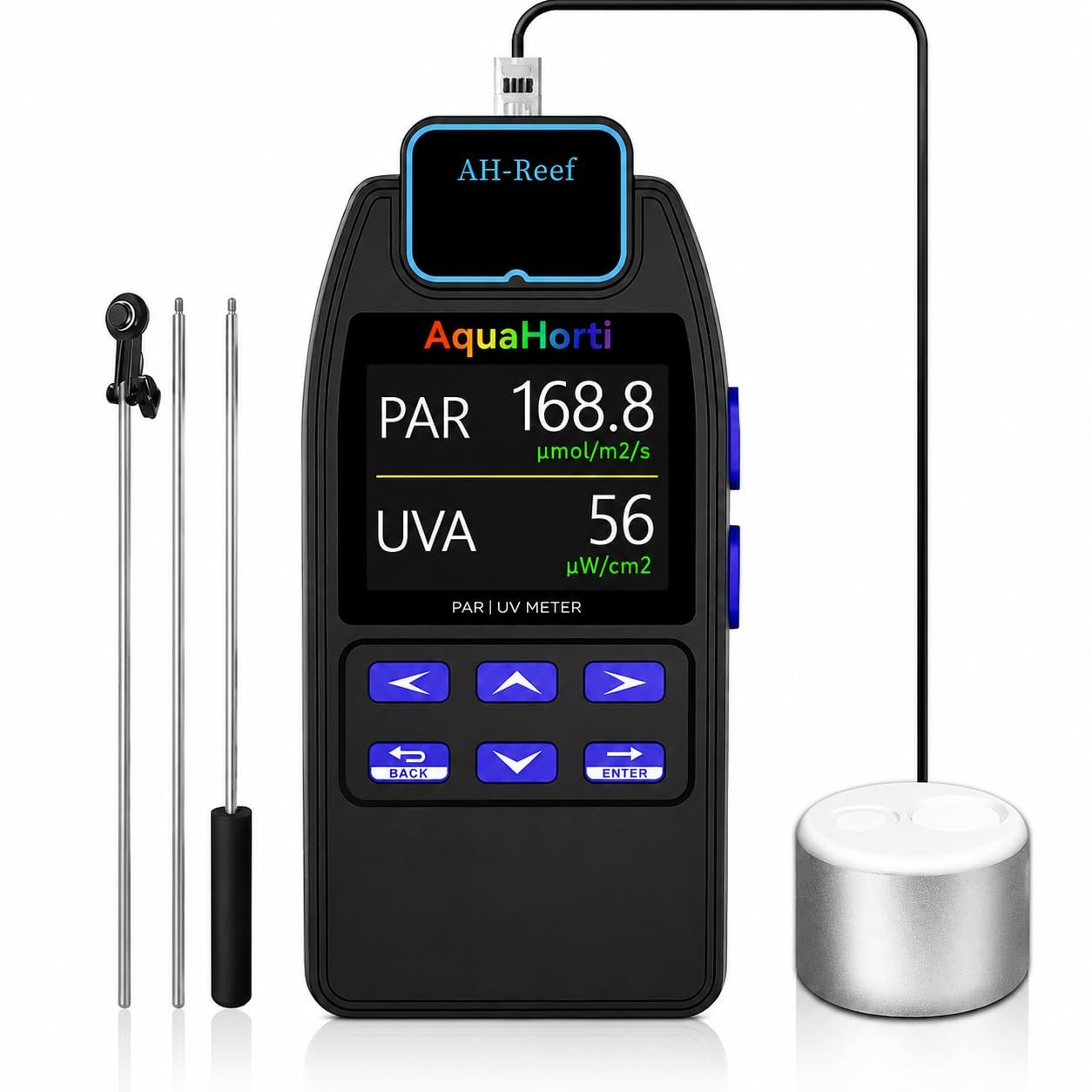
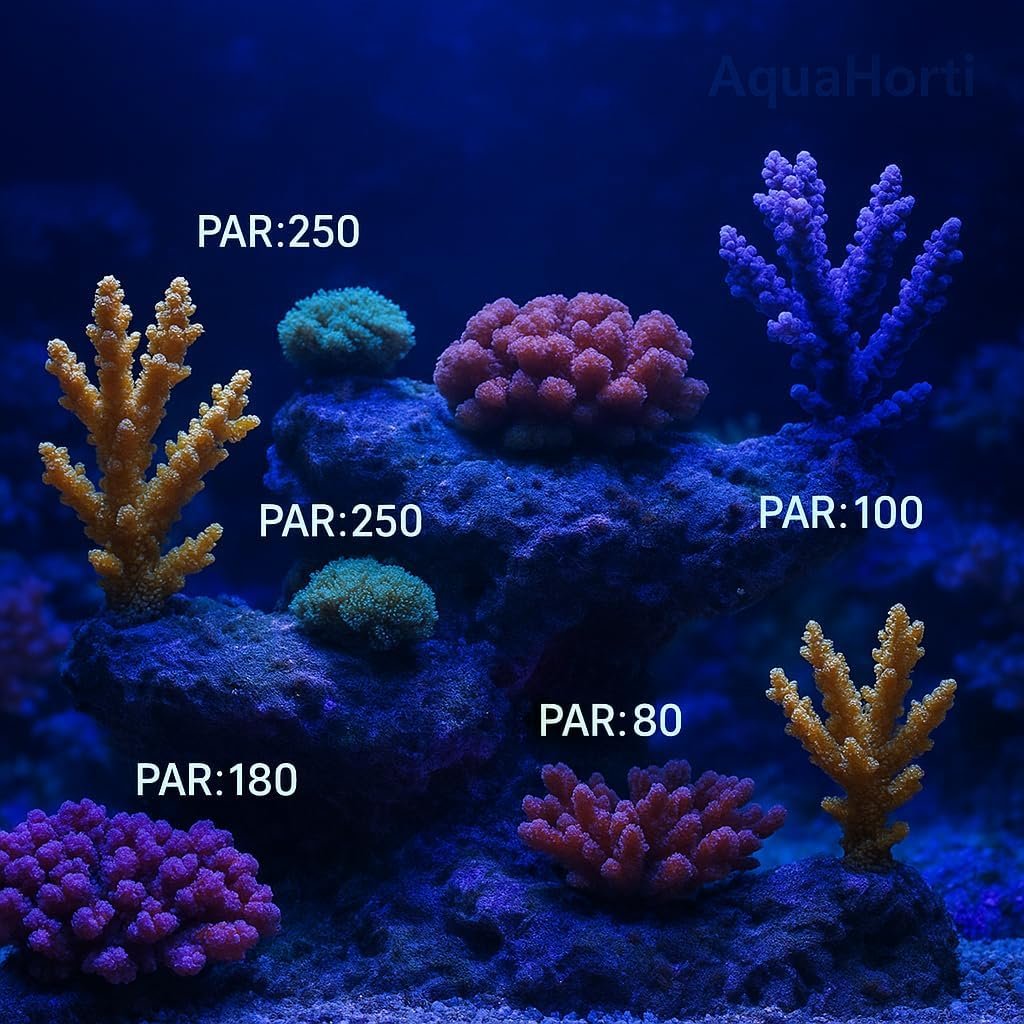
PAR can change dramatically across the same reef tank. AH-Reef measures underwater PAR and UVA at coral level, shows R/G/B spectral balance, applies IECF underwater correction when selected, and records up to 99 points—so fixture tuning and coral placement are based on real data, not guesswork.
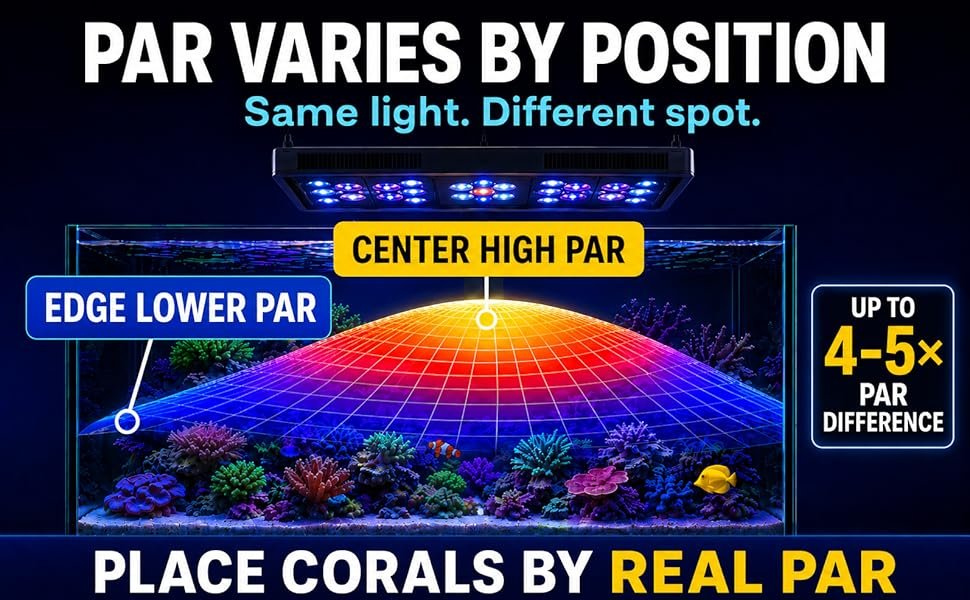
A fixture specification—or a reading from an online video—cannot tell you what reaches every coral. Depth, horizontal position, rockwork, shadows, and mounting height all change the light at coral level.
Measure behind rockwork, near edges, and below overhangs.
Check the center and upper rockwork before placing sensitive corals.
Use the same position and depth to compare lighting changes accurately.
Place the waterproof sensor at the exact depth and location you want to evaluate. AH-Reef displays PAR and UVA together, making it easier to map the real lighting environment inside your aquarium.
Measure at sand bed, mid-level, or upper rockwork.
Use HOLD and RECORD to store up to 99 locations.
Adjust the fixture or choose a better coral position.
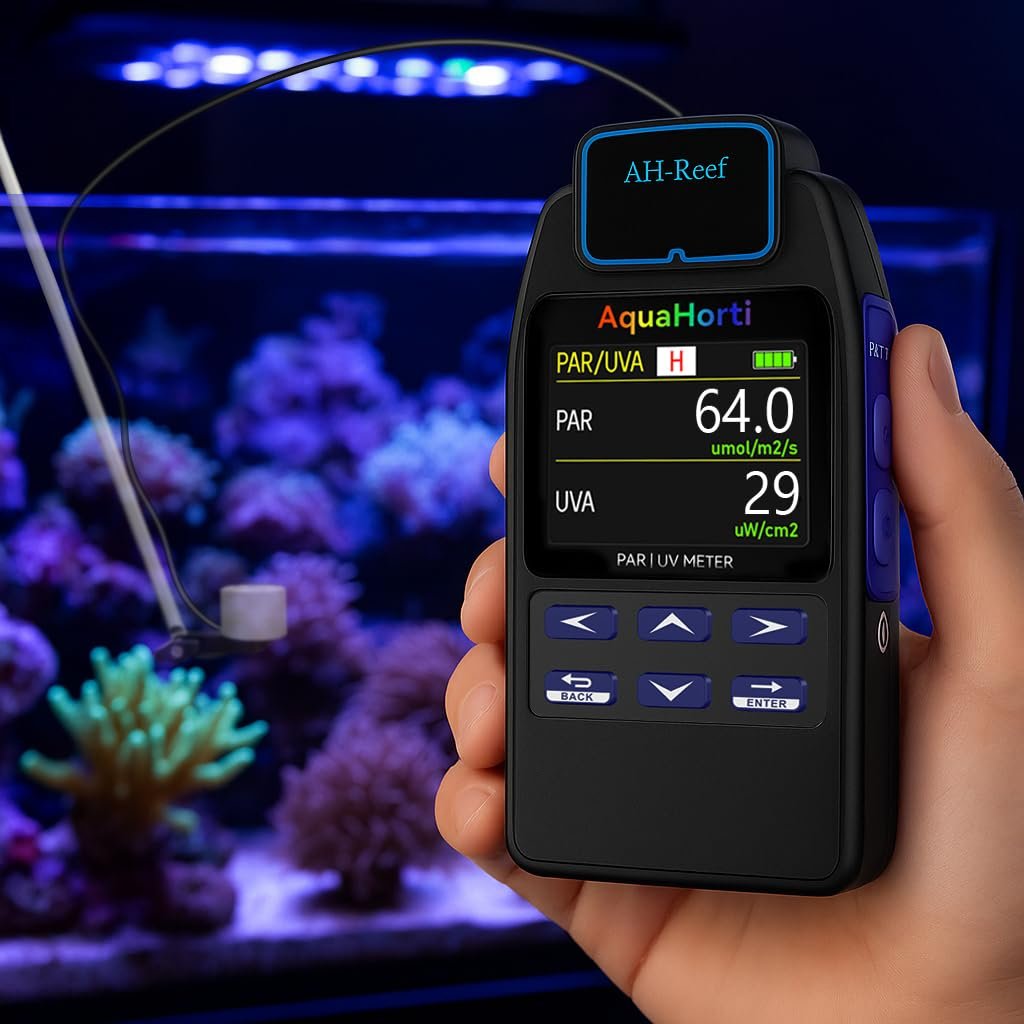
AH-Reef combines the measurements reef keepers use to understand intensity, exposure, spectral balance, and tank-wide distribution.
Measure PAR across 400–700 nm at the exact point you want to evaluate.
See UVA alongside PAR instead of evaluating reef lighting from PAR alone.
Use live red, green, and blue data to understand fixture channel balance.
Freeze and store up to 99 points to document hot spots and shadows.
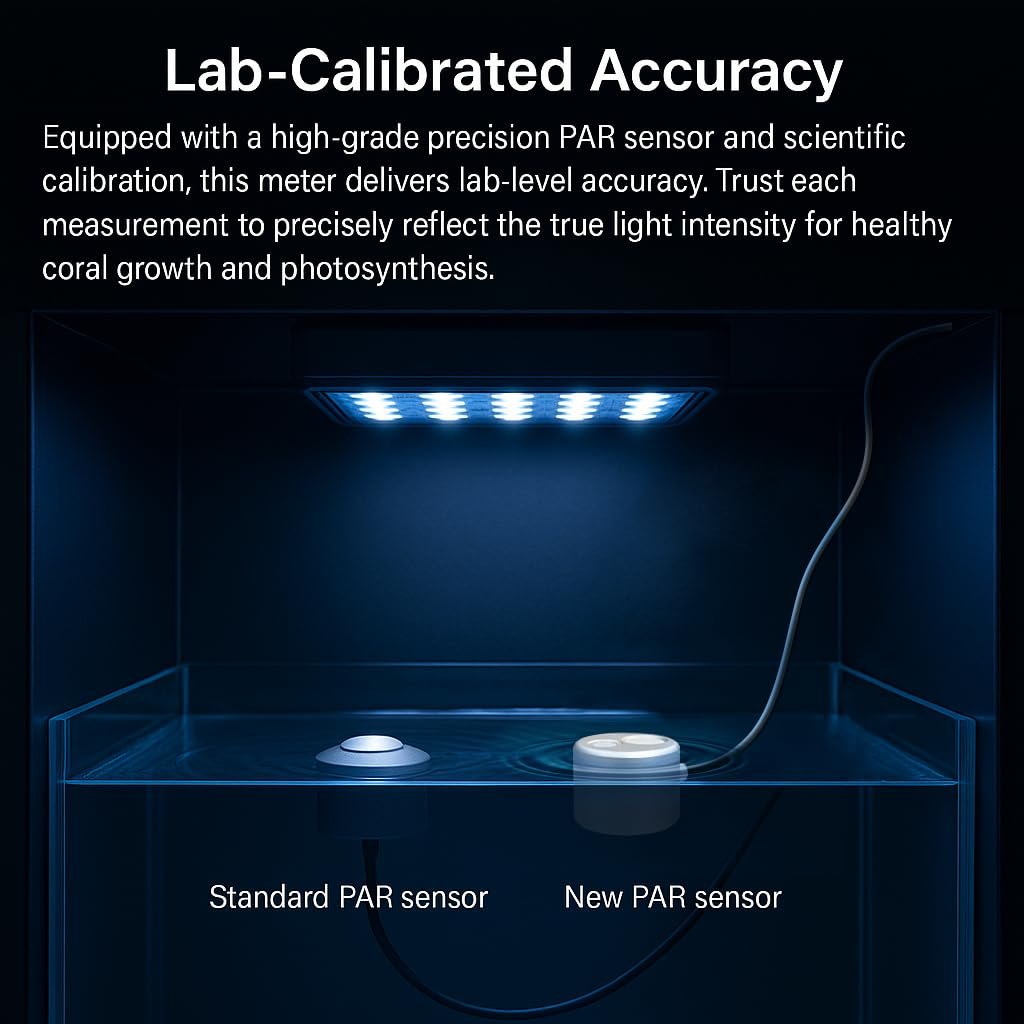
AH-Reef is checked in a controlled aquarium-light setup using a reference sensor under the same light and measurement conditions. Watch the underwater side-by-side comparison below.
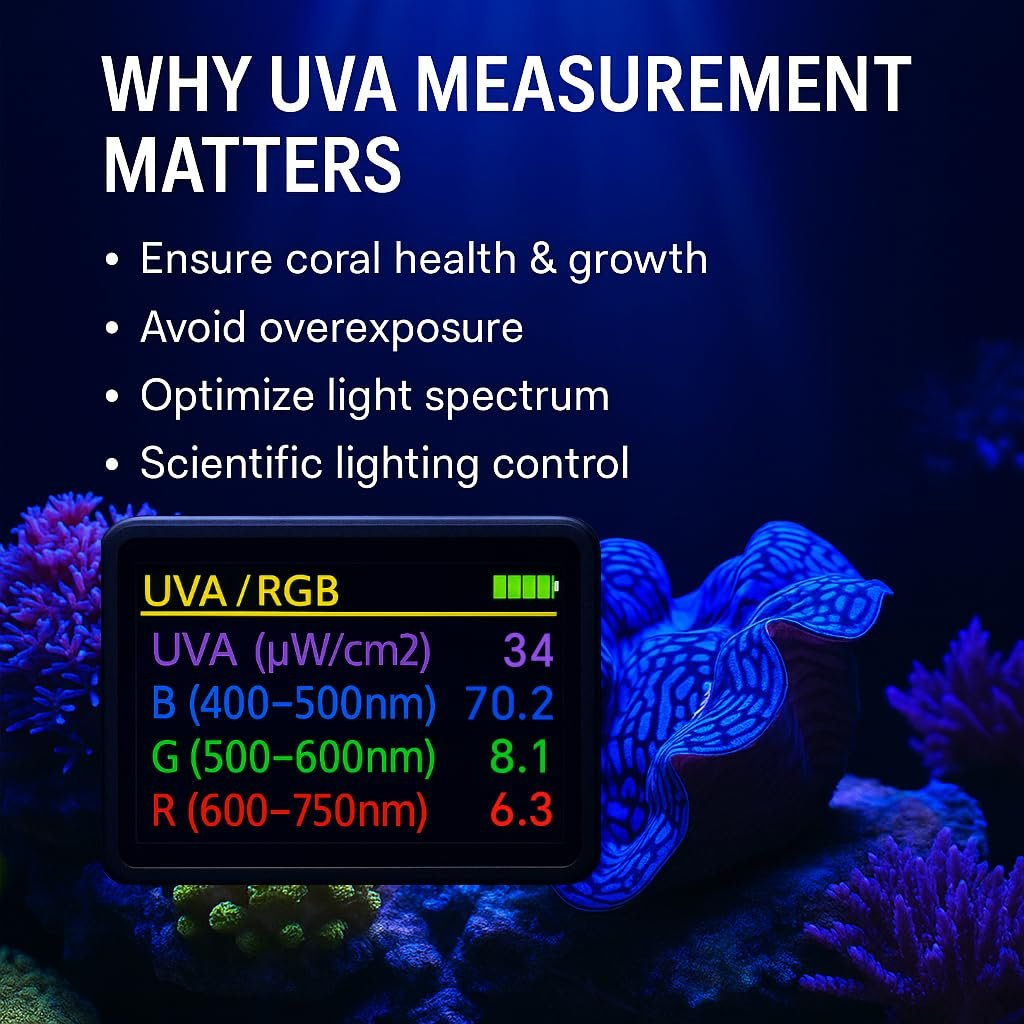
PAR measures photosynthetically active light, but it does not describe every part of a reef fixture’s output. UVA data adds another layer of visibility when you compare settings, acclimate corals, or evaluate total light exposure.
See how UVA changes when you adjust violet and UV channels.
Use measured data instead of relying only on visual brightness.
Review UVA together with PAR and R/G/B values.
Record consistent points across the tank, then use the pattern—not a single number—to guide fixture tuning and coral placement.
Yes. AH-Reef is designed for reef and aquarium lighting, including LED fixtures. For meaningful comparisons, keep the light settings, mounting height, water depth, sensor angle, and horizontal position the same.
PAR is highly position-dependent. A center reading, an edge reading, a different channel program, or a different sensor depth can produce very different results even with the same fixture model.
IECF is the Immersion Effect Correction Factor. When selected, it applies an underwater correction for measurement methods that account for the sensor’s immersion response.
Yes. Use HOLD and RECORD to capture up to 99 readings as you move across different depths and coral positions.
Yes. The waterproof probe is designed for aquarium submersion so readings can be taken at coral level.
Measure PAR, UVA, and spectral balance at the locations that matter—inside your tank.