LED lights can continue working for many years, but that does not necessarily mean their light output stays exactly the same.
We performed a simple comparison test using two ceiling LED lights that had been in service for different lengths of time.
One light had been used for approximately two years, while the other had been used for approximately six months.
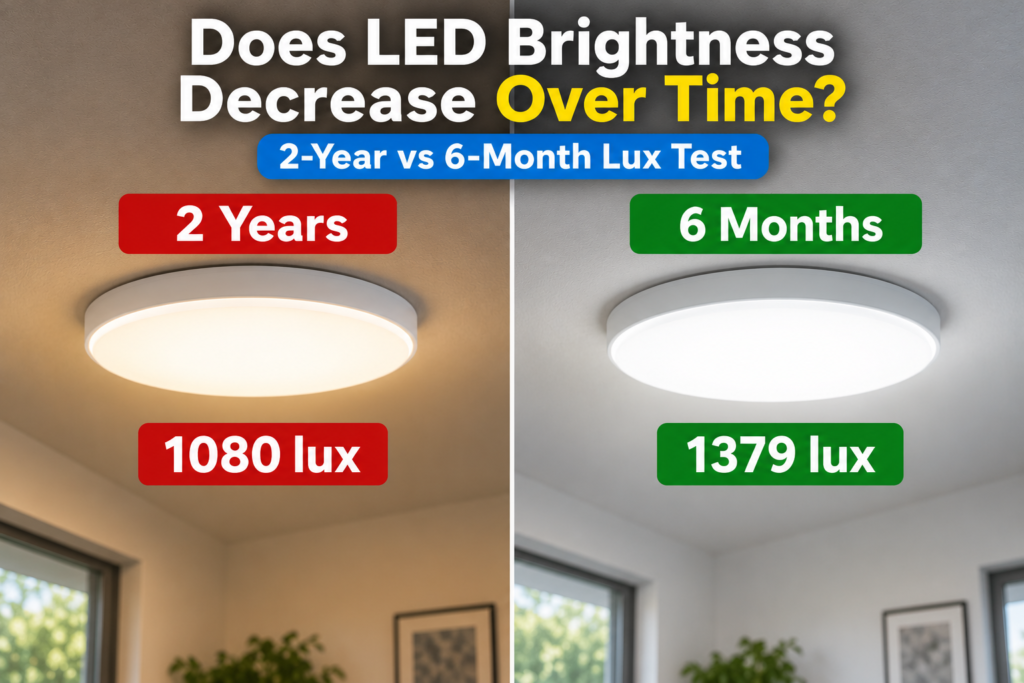
Short answer: under the conditions shown in this test, the two-year-old light measured 1080 lux, while the six-month-old light measured 1379 lux.
That is a difference of 299 lux, with the older light measuring approximately 21.7% lower illuminance than the newer light in this comparison.
This was a practical field comparison, not a standardized LED lifetime or lumen-maintenance test.
Watch the Original Test
The original AquaHorti test video was published on March 23, 2025.
How Was the LED Brightness Test Performed?
The video compares two ceiling LED lights installed in the same indoor environment.
The first light had been in use for approximately two years.
The meter was positioned below the light and showed an illuminance reading of approximately:
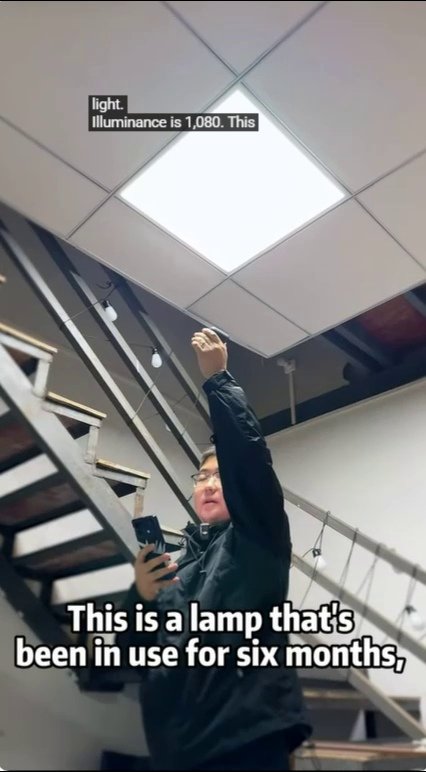
1080 lux
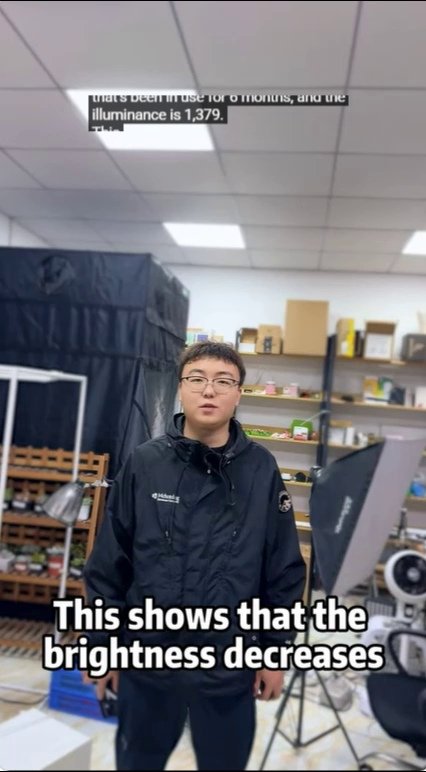
The second light had been in use for approximately six months.
Using a similar measurement approach, the meter showed approximately:
1379 lux
The test therefore showed a measurable difference in illuminance between the two lights.
What Did the Lux Meter Show?
| Light tested | Approximate time in use | Illuminance |
|---|---|---|
| Older LED light | 2 years | 1080 lux |
| Newer LED light | 6 months | 1379 lux |
| Difference | — | 299 lux |
Relative to the six-month-old light, the two-year-old light produced approximately 21.7% less illuminance at the measurement point.
Test result
In this comparison, the older LED light produced a lower lux reading than the newer light.
However, this result should not be interpreted as a universal degradation rate for LED lighting.
What Is LED Lumen Depreciation?
LED lighting often does not fail suddenly.
Instead, its light output can gradually decrease over time, a process commonly called lumen depreciation.
ENERGY STAR describes LED lifetime differently from traditional lamps because LEDs often continue operating while gradually becoming dimmer.
The U.S. Department of Energy also notes that the amount of light emitted by LED luminaires can decline over time and recommends periodically checking light levels in long-term installations.
This means a light can still appear to be working normally even though its measurable output has changed.
Does This Test Prove the LED Lost 21.7% of Its Original Brightness?
No.
The calculation only compares two different lights measured during this video.
We did not measure the two-year-old light when it was brand new, so 1379 lux cannot be treated as its original baseline.
The 21.7% figure therefore describes the difference between these two measurements, not the verified lifetime depreciation of one individual fixture.
That distinction is important.
Test Limitations
This was a practical comparison rather than a controlled laboratory lumen-maintenance test.
The video does not document identical operating hours, initial output, exact sensor-to-light distance, fixture temperature, supply voltage, ambient light, lens cleanliness or manufacturing variation between the two lights.
Any of these factors can influence a lux reading.
For a rigorous LED aging study, the same fixture should be measured repeatedly at a fixed geometry and under controlled electrical and environmental conditions.
Why Can Lux Decrease as an LED Ages?
LED systems can experience changes in light output over time.
The LED packages themselves may undergo lumen depreciation, while thermal conditions, optics, drivers and other luminaire components can also affect long-term output.
The U.S. Department of Energy notes that complete luminaire performance can involve more than LED package depreciation alone.
This is one reason why real-world lighting maintenance should rely on actual measurements rather than simply checking whether a lamp still turns on.
Related LED Brightness Test
LED output can also change shortly after switch-on. See our LED Brightness Drop After Warm-Up – Lux Test for a different type of brightness comparison.
Why Measure Lux Over Time?
A room can slowly become darker without the change being obvious from day to day.
Periodic illuminance measurements can help identify changes in lighting performance in spaces such as:
offices, workshops, warehouses, retail stores, classrooms and production areas.
The most useful method is to measure the same location, at the same sensor height, under the same lighting configuration, and compare the readings over time.
A Better Long-Term LED Test
For a more reliable aging comparison, record a baseline measurement when a light is first installed.
Then repeat the same measurement after several months or years while keeping the test geometry unchanged.
For example:
Day 1 → 6 months → 1 year → 2 years
This creates a true measurement history for the same fixture and makes it easier to separate actual light-output change from differences between individual lamps.
About the Meter Shown in the Video
The original 2025 video shows AH-310 in the app interface.
AquaHorti’s current indoor-light measurement product is AH-300, designed for measurements including LUX/FC, CCT and other lighting parameters.
Learn more: AH-300 Light Meter – LUX, CCT & Blue-Light Measurement
Frequently Asked Questions
Does LED brightness decrease over time?
Yes, LED light output can gradually decrease over long-term use. This is commonly called lumen depreciation.
What did the two-year-old LED measure in this test?
The approximately two-year-old ceiling light measured about 1080 lux.
What did the six-month-old LED measure?
The approximately six-month-old light measured about 1379 lux.
How much lower was the older light in this comparison?
The difference was 299 lux, meaning the older light measured approximately 21.7% lower illuminance than the six-month-old light.
Does this mean every LED loses 21.7% brightness after two years?
No. This was a comparison between two individual lights, not a controlled lifetime test of the same fixture from new to two years old.