Measure more than one position.
Place AH-NUV at repeatable points across the exposure area to compare center, edge and other locations.
Measure actual 385nm and 405nm UV irradiance, compare the center, edges and other positions, and check whether your LCD, DLP or SLA resin printer has weak or uneven UV output.
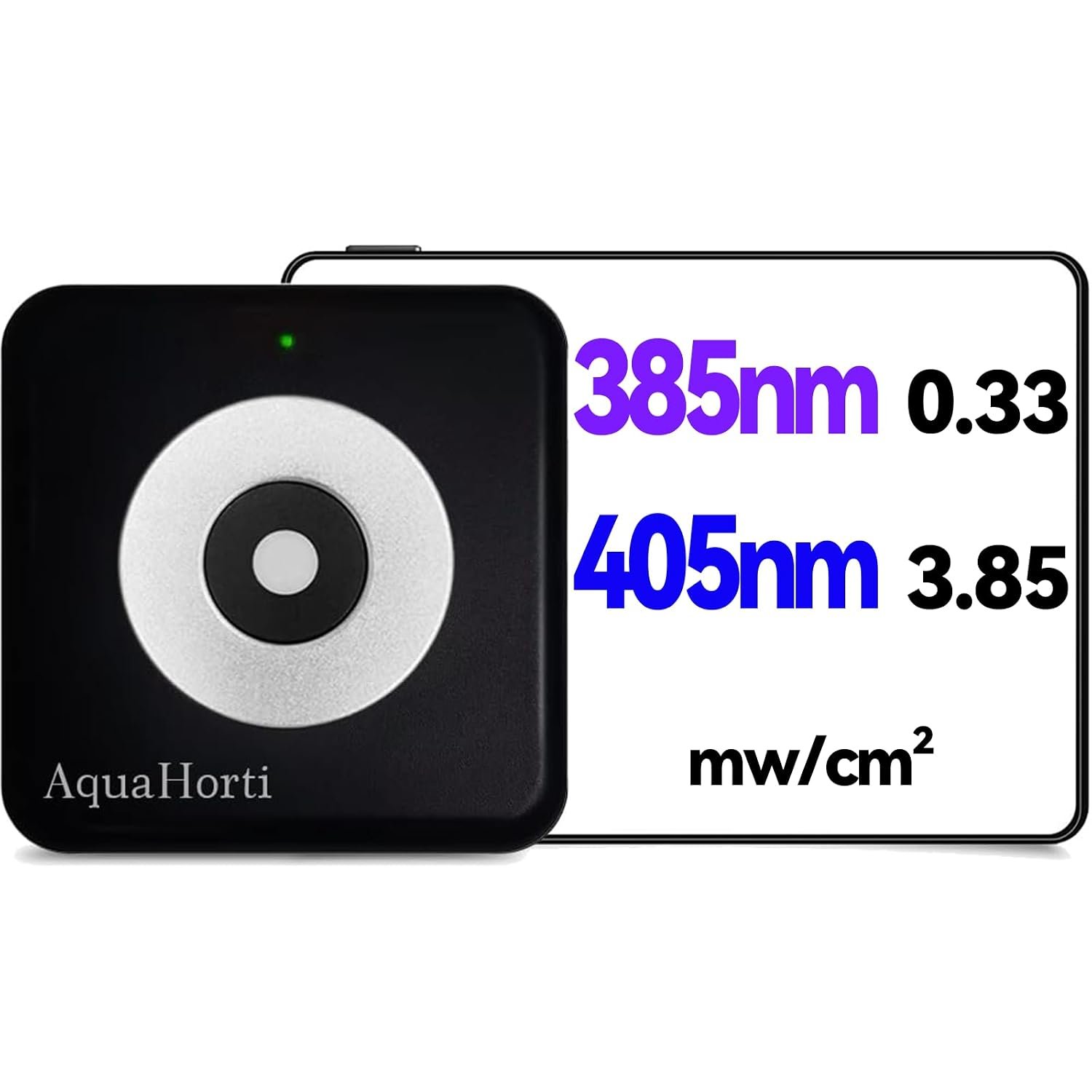
If the same resin cures differently near the center, edges or corners, the useful question is not only whether the UV light turns on — it is whether the actual UV irradiance is consistent across the exposure area.
Place AH-NUV at repeatable points across the exposure area to compare center, edge and other locations.
The current product listing specifies 385 nm and 405 nm UV irradiance measurement for standard photopolymer resin 3D printers.
Use the Bluetooth app to view irradiance during testing, reducing the need to look directly toward the printer's UV source.
Check the UV irradiance used by standard photopolymer resin 3D printers.
Measure repeatable points across the exposure area to compare the center, edges, corners and other locations, reveal weaker areas, and understand the printer's UV irradiance distribution more clearly.
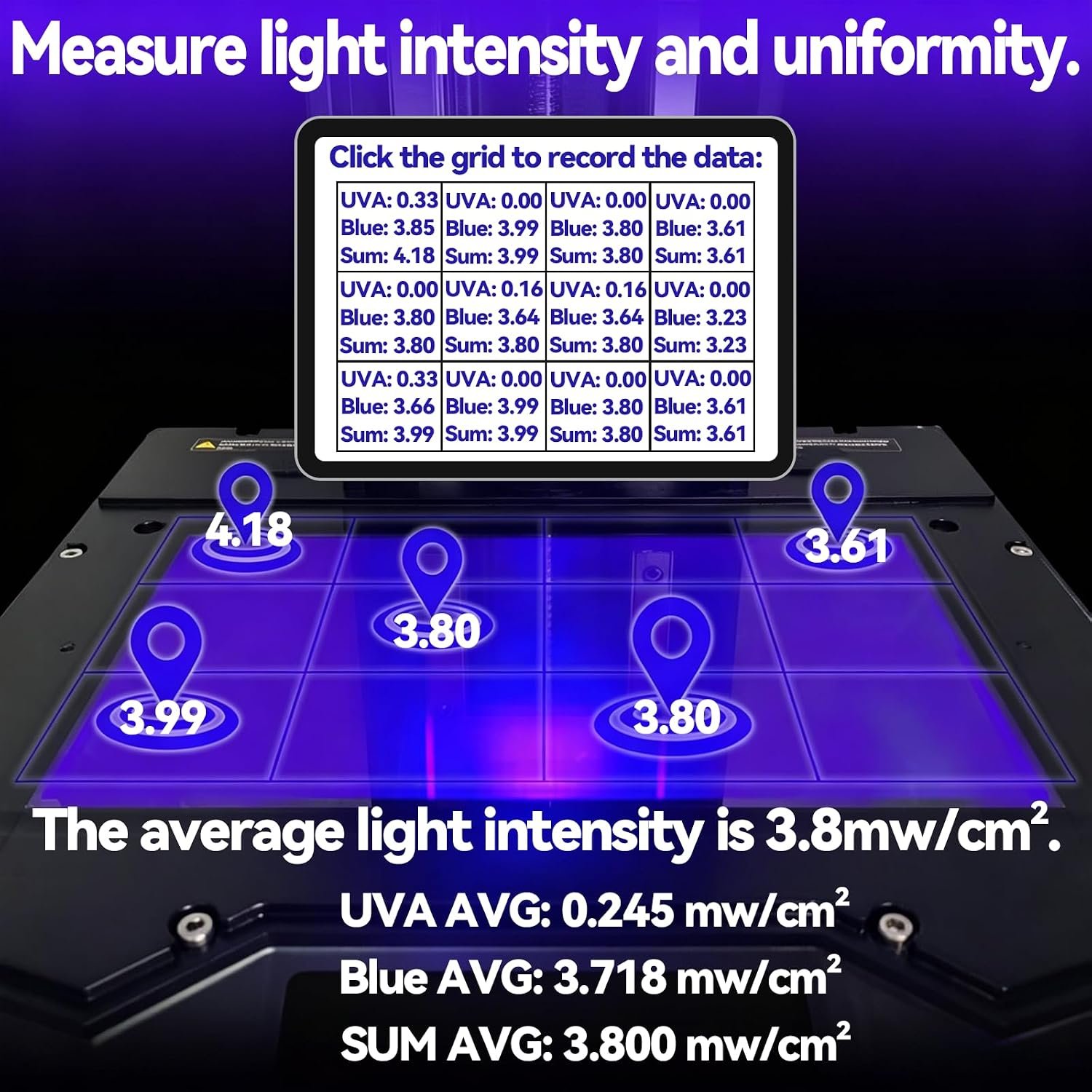
View the measurement away from the UV light source while testing your resin printer.
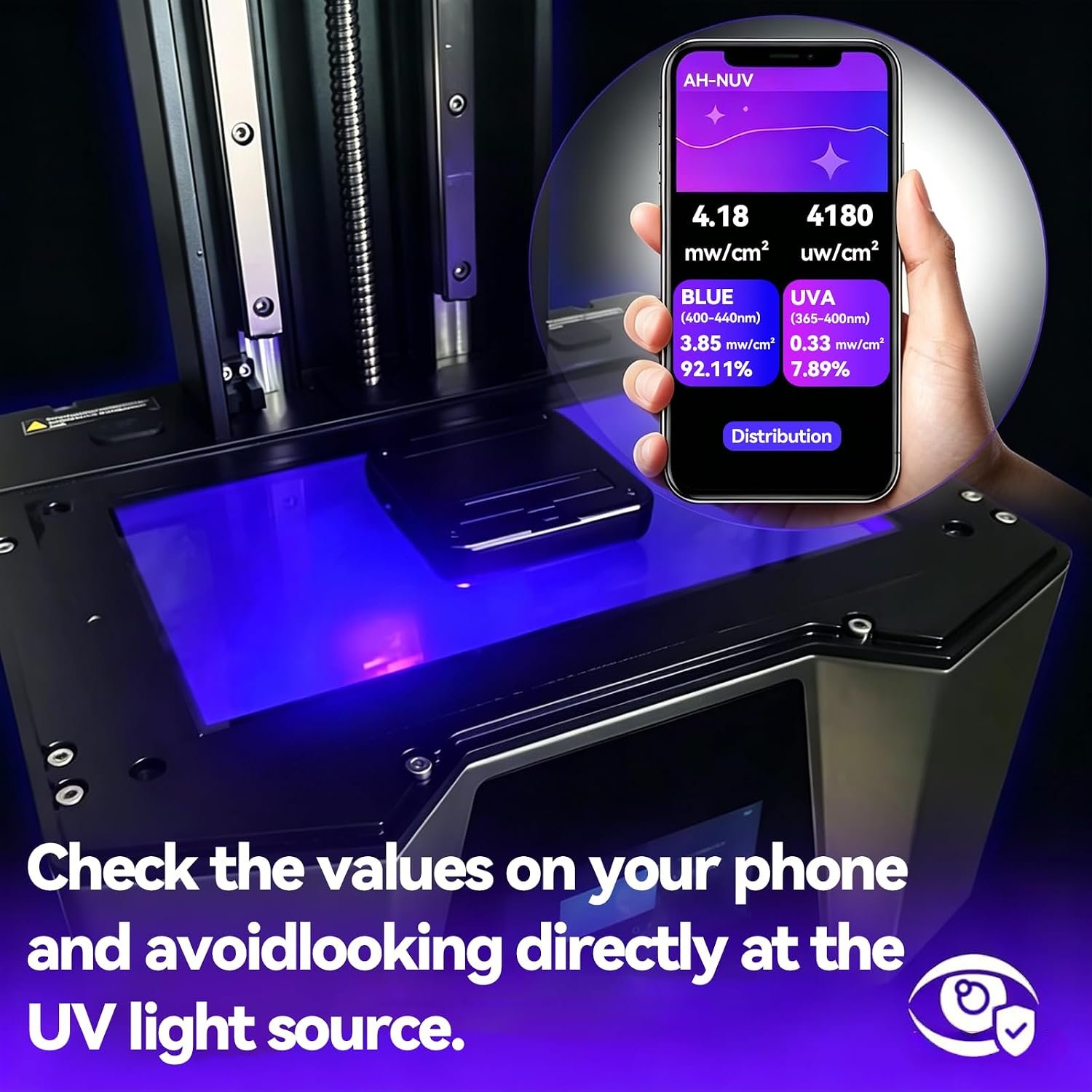
Connect the AH-NUV directly to your phone through Bluetooth.
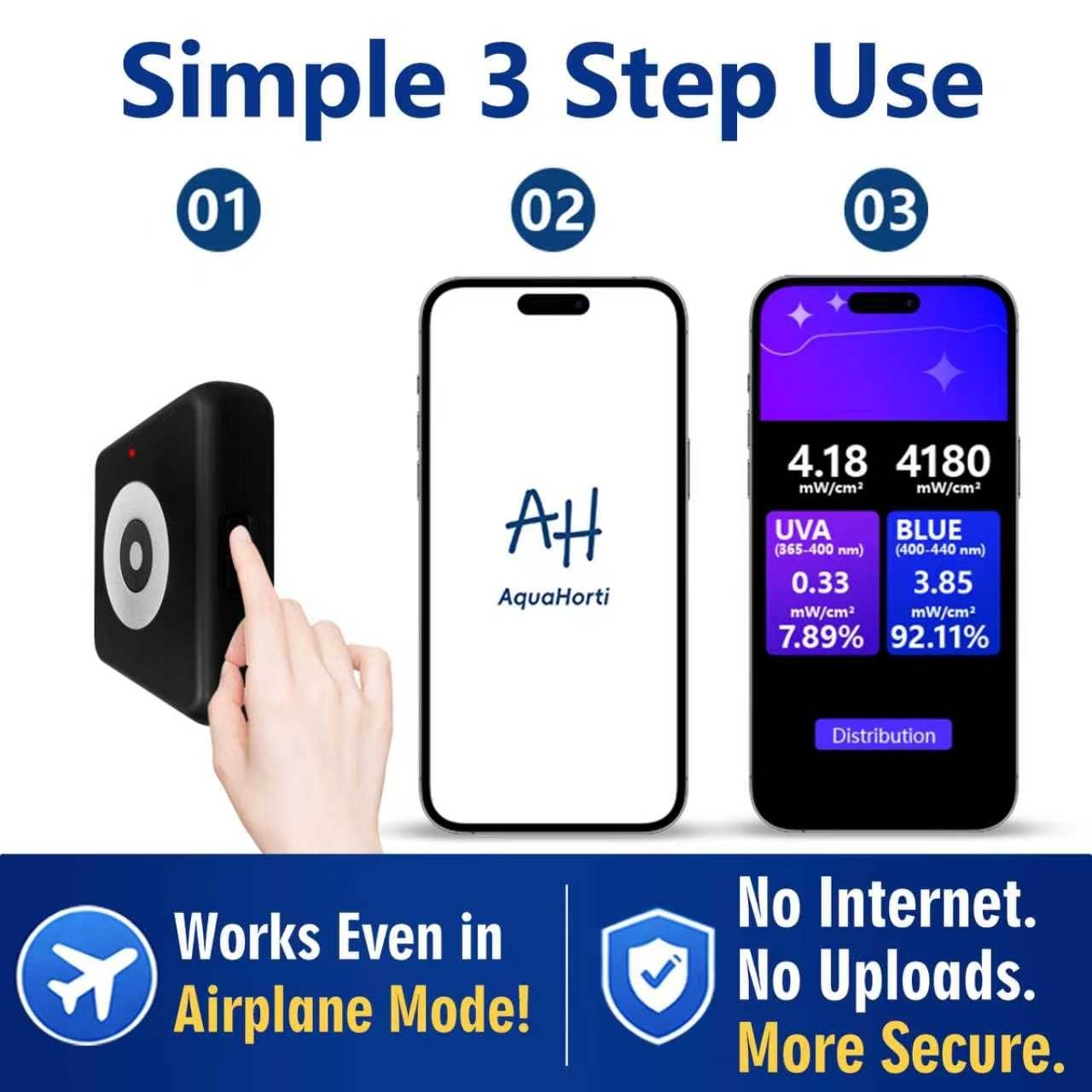
Check the actual UV output of your resin printer.
Compare multiple printers or different areas of one printer.
Investigate UV inconsistency when printer performance changes.
AquaHorti used AH-NUV to record UV irradiance across a resin 3D-printer exposure area with a 4 × 3 grid. Twelve positions were recorded in the Bluetooth app so the center, edges, corners and other locations could be compared instead of relying on one center reading.
Measured values from a specific test setup should not be treated as universal product specifications. Use the product information on this page for AH-NUV features and the test article for the documented measurement workflow.
Short answers about wavelengths, printer types, UV uniformity and Bluetooth measurement.
AH-NUV is designed to measure UV irradiance from standard photopolymer resin 3D printers at 405 nm and 385 nm, and to help compare UV intensity and distribution across the exposure area.
Yes. Measure multiple positions across the exposure area to compare center, edge, corner and other locations, identify weaker areas, and evaluate UV irradiance distribution.
Yes. The current product listing specifies 385 nm and 405 nm UV irradiance measurement for standard photopolymer resin 3D printers.
The current listing identifies LCD, DLP and SLA standard photopolymer resin 3D printers as intended applications.
Yes. AH-NUV connects to a smartphone through Bluetooth so irradiance readings can be viewed in the app during testing.
No. The current product listing states that the Bluetooth connection can be used without an internet connection.
It can help verify printer UV output, compare intensity at different positions, evaluate light distribution, compare different printers or maintenance conditions, and investigate curing-related performance changes.
Yes. AquaHorti published a 12-point resin 3D-printer UV uniformity test using AH-NUV. The test records a 4 × 3 grid across the exposure area so center, edge, corner and other positions can be compared instead of relying on one center reading. Read the real-world test →
No. AH-NUV is positioned for 385 nm and 405 nm UV irradiance measurement in standard photopolymer resin 3D printers. For sunlight UV Index, use a meter designed for sunlight UVI.
Choose your preferred Amazon marketplace.